AUGUSTO DE CAMPOS
(Brazil)
Veja também: See also: AUGUSTO DE CAMPOS
AUGUSTO DE CAMPOS 2
AUGUSTO DE CAMPOS 3
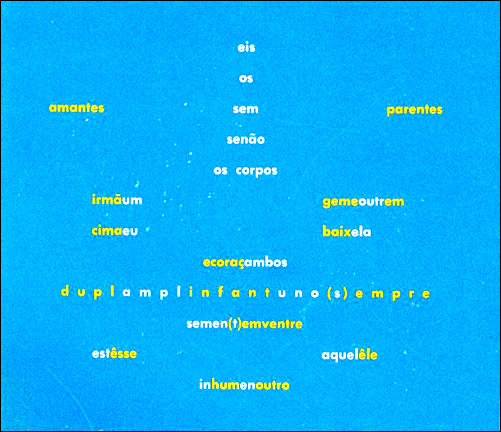
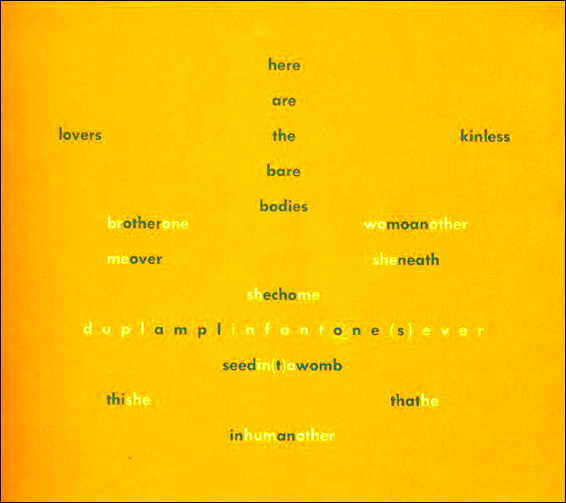
CONCRETE POEM
(Originally published in Poetamenos (Poet-Minus) 1953.
Translation Augusto de Campos, Marco Guimarães and M. E. S.
From: ARTES HISPANICAS / HISPANIC ARTS. Volume 1 Number 3 &4 Winter Spring 1968. Textos e antologia de Poesia Concreta no mundo com destaque para os brasileiros Augusto e Haroldo Campos, Décio Pignatari, etc
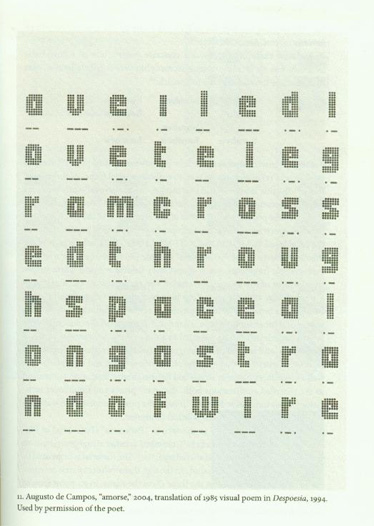
AMORSE
Augusto de Campos, "amorse" 2004, translation of 1985 visual poem in Despoesia, 1994.
From: PERRONE, Charles A. Brazil, Lyric and the Americas. Gainsville: University Press of Florida, 2010. p. 146-148 ISBN 978-0-8130-3421-8
"The late-twentieth-century surge in communication technology especially benefited, in terms of exposure and understanding, the legacy of poesia concreta (even if somewhat tardily), as well as aiding subsequent similar experiments that relied on visuality, kinetic roles, or other nonconventional strategies. A wonderful example of inter-American poetic ingenuity was offered by Augusto de Campos, the artist who remained most faithful to the synthetic visuality of classic concrete poetry. The 1985 piece "amorse" is a signic homage to the inventor of telegraphic code and lays bare the emotive fundaments of lyric via a line by the Spanish American modernista José Asunción Silva.
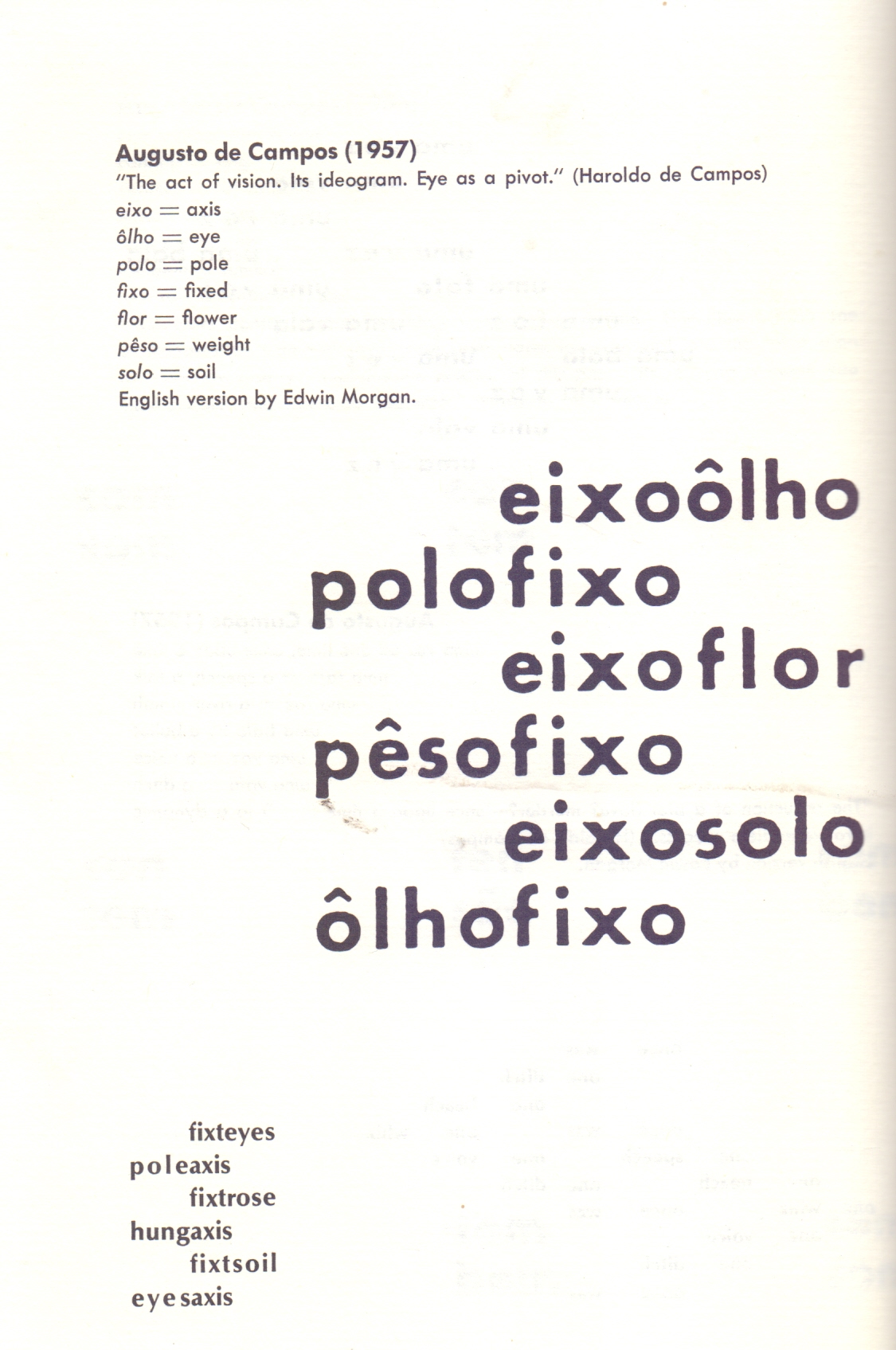
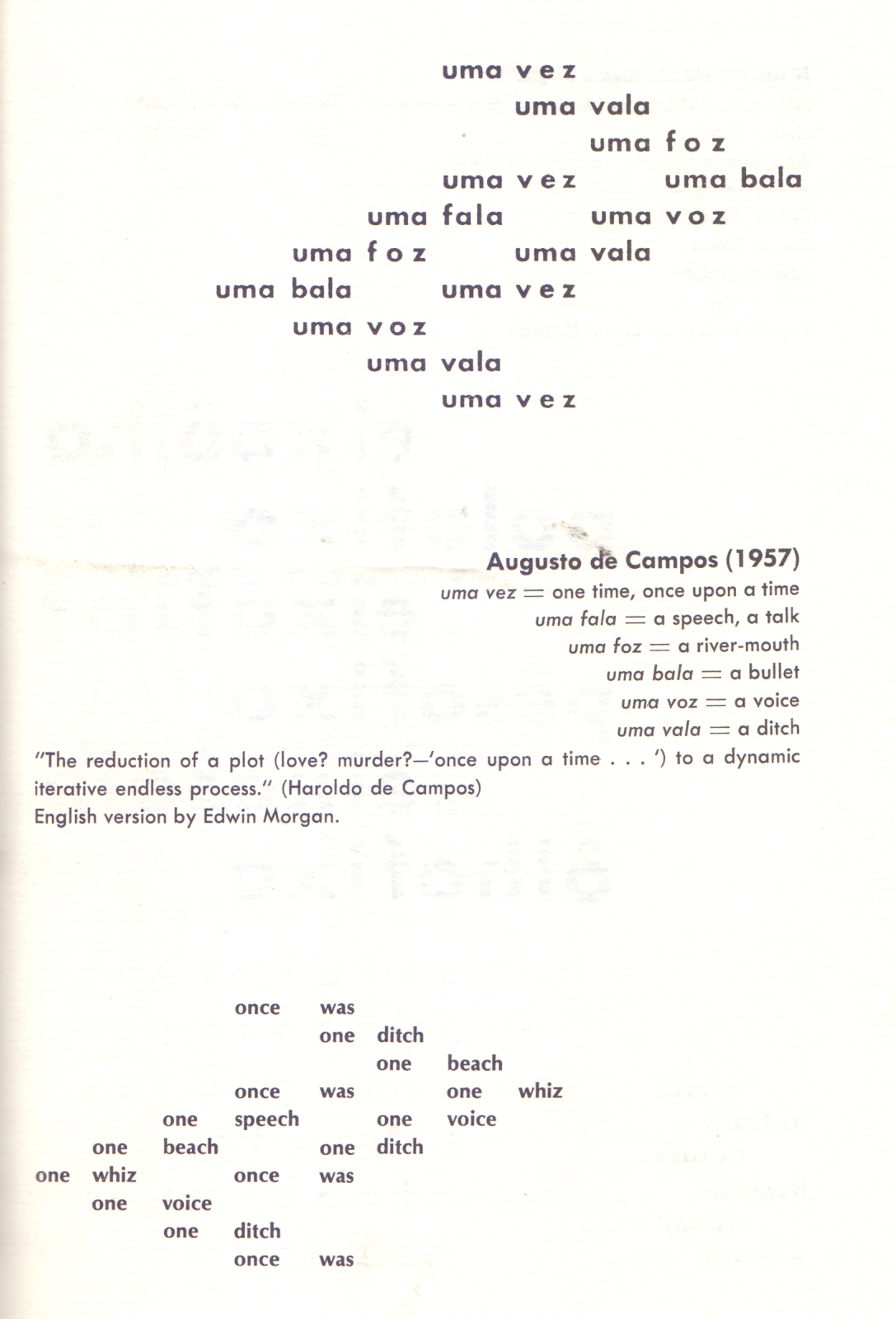
From: AN ANTHOLOGY OF CONCRETE POETRY. Edited by Emmett Williams. New York: Something Else Press, 1967. 342 p. ilus. hard cover
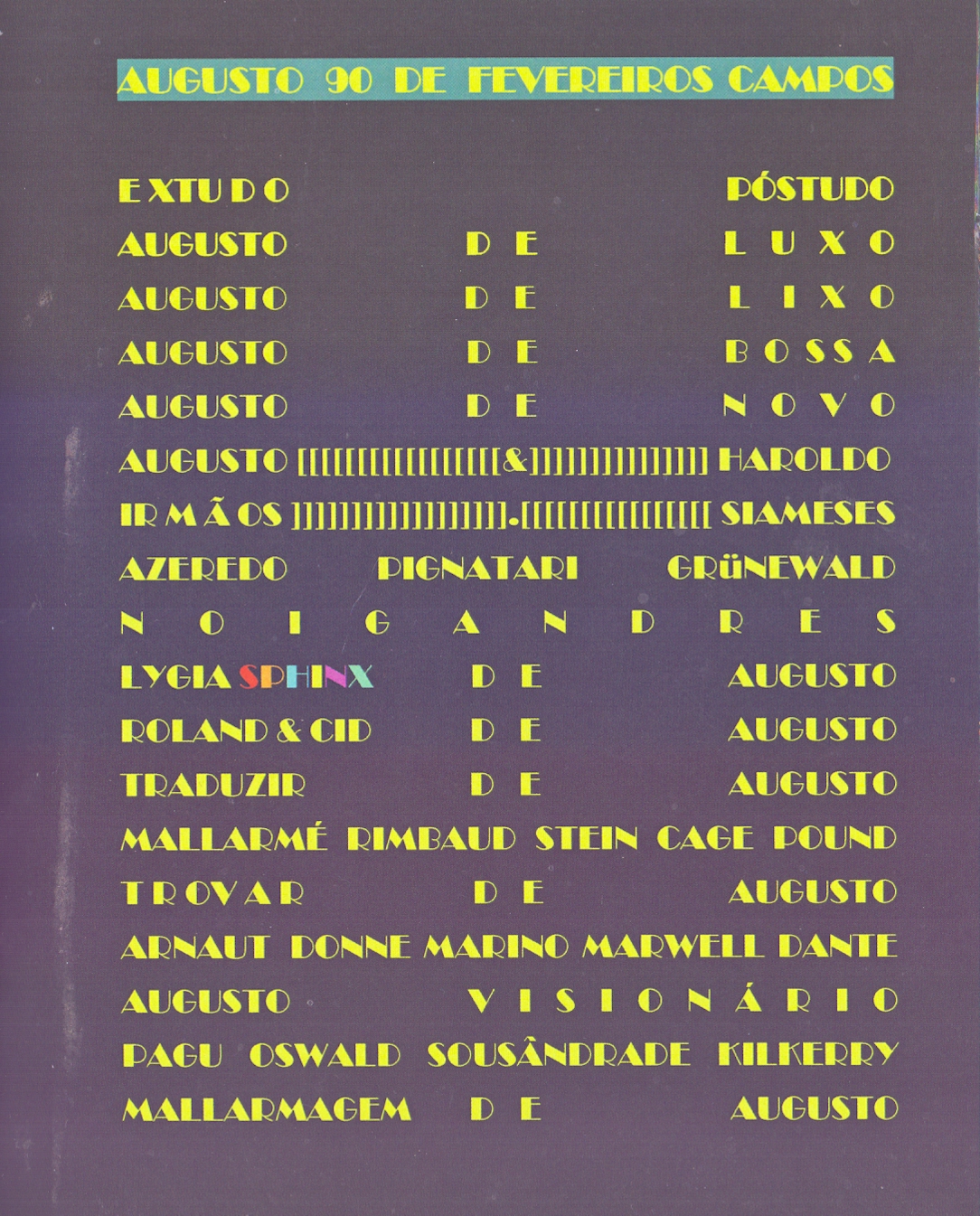
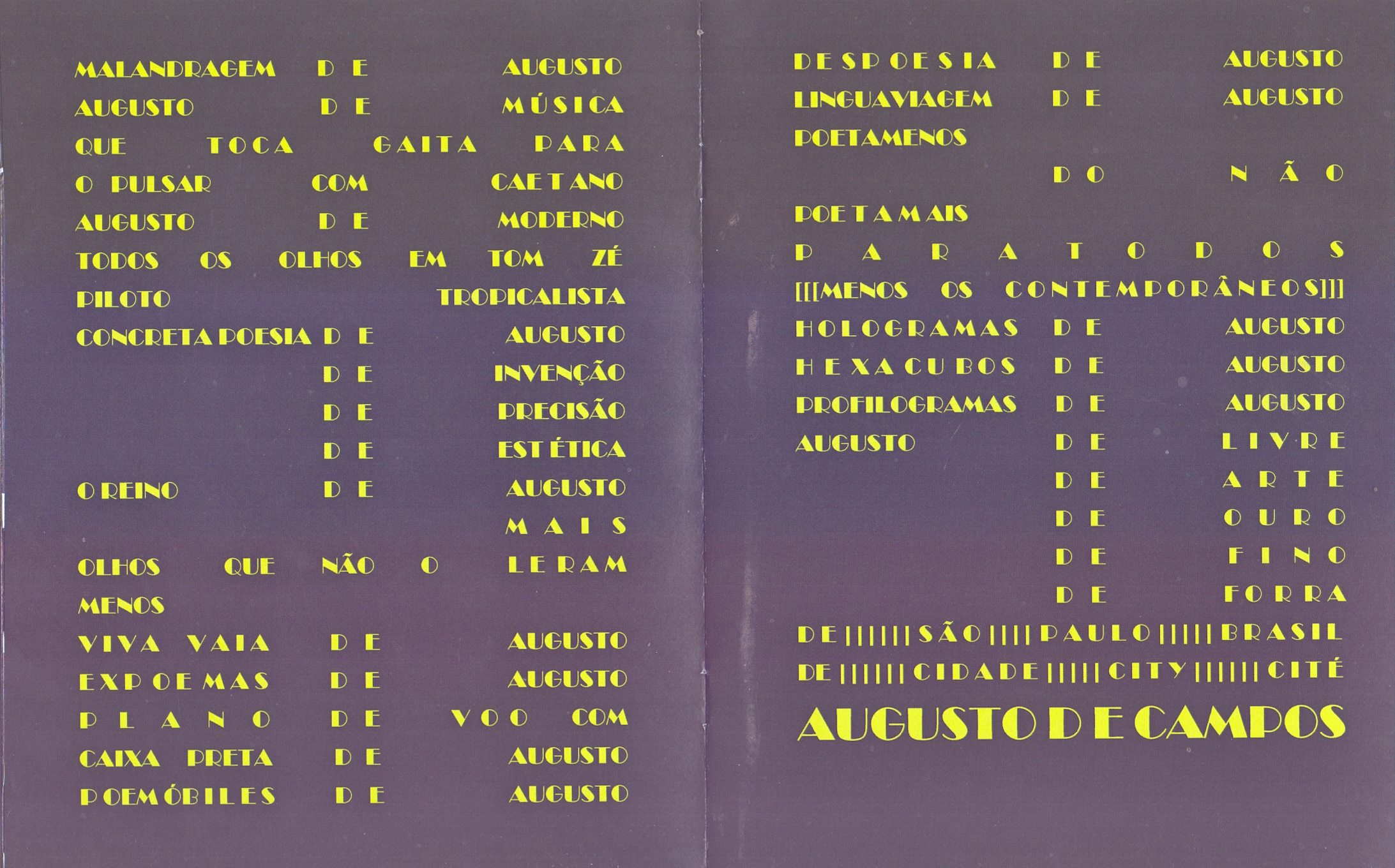
RIBEIRO, Ésio Macedo. AUGUSTO 90 DE FEVEREIROS CAMPOS. Londrina, PR: Galileu Edições, 2021 12 p. 15 x 21 xm. 15 exs. numerados. Inclui poemas de Ésio Macedo Ribeiro em homenagem aos 90 anos de Augusto de Campos :
O poema “CANTIGA URBANA”, de Ésio Macedo Ribeiro, foi dedicado a Augusto de Campos, e publicado no livro Estranhos Próximos (Brasília: Edição do Autor/FAC, 2008, p. 91). Para a edição de AUGUSTO 90 DE FEVEREIROS CAMPOS, o poema foi revisto e modificado:
Página ampliada em novembro de 2021
|